Egypt's most visited monuments represent a fraction of the country's documented heritage. The sites below are selected for visitors who want to move beyond the Giza–Luxor–Aswan axis and encounter Egypt's ancient landscape in its fuller complexity. Many involve travel logistics that require more planning than the headline sites; our guides provide the specific transport, permit and timing information you need. For a curated collection of the 50 most visitor-ready sites, see our Top Sites page.
 Upper Egypt — Sohag Governorate
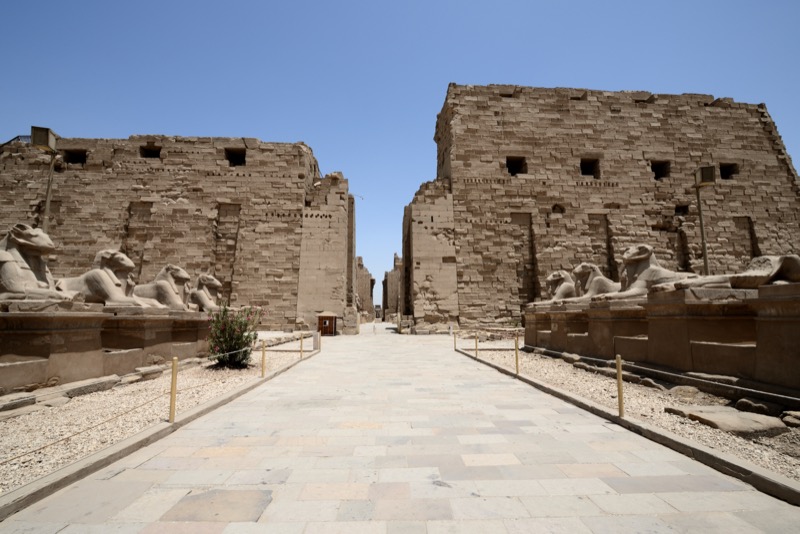
Abydos — Temple of Seti I
Abydos was ancient Egypt's most sacred site — the burial place of the god Osiris, according to religious tradition, and the location of the oldest royal graves from the First and Second Dynasties. The Temple of Seti I (c. 1280 BCE) is considered by many Egyptologists to contain the finest painted relief decoration in Egypt. The walls of its seven sanctuary chapels, dedicated to Osiris, Isis, Horus, Ptah, Ra-Horakhty, Amun and Seti himself, retain polychrome paint of extraordinary vibrancy, despite more than three thousand years of exposure.
The temple also contains the Abydos King List — a carved wall panel recording the names of 76 pharaohs from Menes to Seti I, an invaluable primary source for royal chronology. The adjacent Temple of Ramesses II and the Osireion — a cenotaph of Seti I built to imitate an underground burial chamber — complete the main visitor circuit. The Osireion's central island, surrounded by a water-filled trench, creates an architecturally unique and eerily effective funerary landscape.
Abydos is reached by a two-hour drive from Luxor or a one-hour drive from Sohag. Entry: EGP 360. Best combined with Dendera Temple, 90 minutes further north. The road between the two sites passes through fertile agricultural land — one of the most scenic overland stretches in Upper Egypt. Our Day Tours page covers the Abydos–Dendera circuit in detail.
 Upper Egypt — Qena Governorate
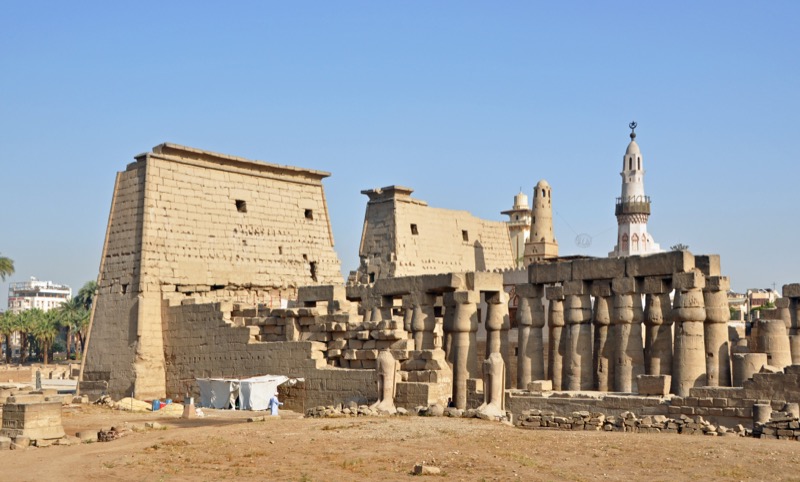
Dendera — Temple of Hathor
The Ptolemaic Temple of Hathor at Dendera is the best-preserved ancient Egyptian temple precinct in existence — not because it is exceptionally old (construction began around 54 BCE under Ptolemy XII and was completed under Cleopatra VII and later Roman emperors) but because it was buried to its roof under desert sand for much of its post-pharaonic history, protecting its painted ceilings from weathering. The pronaos ceiling, depicting the sky goddess Nut, the zodiac in its Ptolemaic Egyptian hybrid form, and the daily journey of the sun barque, retains paint so vivid it appears freshly applied.
The complex includes a sacred lake, a sanatorium where pilgrims received healing dreams, a Coptic church built within the temple's outer court, and a series of underground crypts accessible via narrow stone staircases — the crypts contain some of the most carefully executed relief decoration in Egypt, carved in intimate scale for an audience that was never intended to be the general public. The famous Dendera Zodiac (now in the Louvre) was removed in 1820; a plaster cast is displayed in situ. Entry: EGP 180. Open 07:00–17:00.
 Giza Governorate
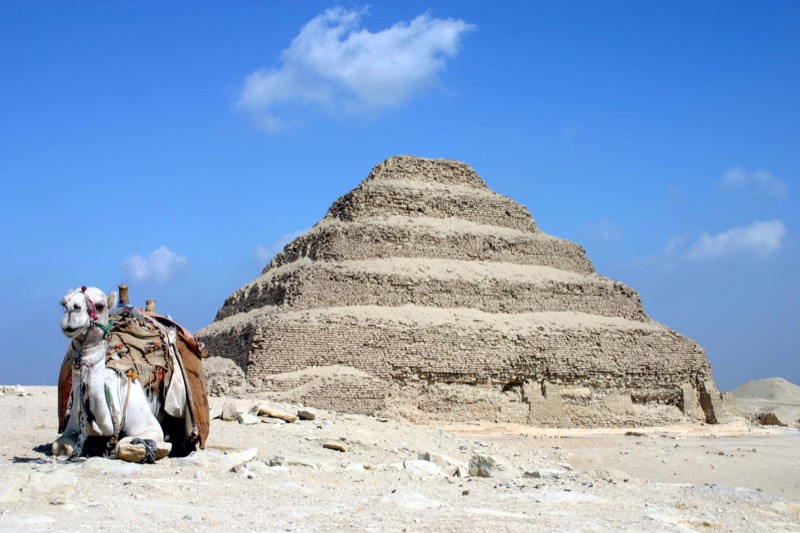
Saqqara — Memphis Necropolis
Saqqara served as the main cemetery for Memphis, Egypt's first capital, for over three thousand years — from the early Dynastic period (c. 3100 BCE) through to the Coptic era (c. 700 CE). The Step Pyramid complex, covered in detail on our Top Sites page, is the headline attraction. But the broader Saqqara necropolis is significantly larger and rewards multiple visits or extended exploration.
Key points beyond the Step Pyramid include: the Pyramid Texts in the Pyramid of Unas (the oldest funerary literature in the world, inscribed in hieroglyphs and painted in blue-green pigment on the white limestone walls of the burial chamber — accessible via a narrow descending corridor); the Serapeum (underground catacomb containing the black granite sarcophagi of the Apis bulls, each weighing 60–80 tonnes); the Tomb of Ti (Sixth Dynasty, remarkable for its relief scenes of daily agricultural life); and the Tomb of Kagemni. Recent excavations in the Bubasteion area are uncovering Late Period animal mummy catacombs of extraordinary scale. Entry covers most areas; specific tombs and the Serapeum carry supplementary tickets.
 Giza Governorate
Dahshur — Sneferu's Pyramids
Dahshur is one of the least crowded of Egypt's major pyramid sites — extraordinary given that it contains two of the most architecturally significant pyramids ever built. The Bent Pyramid (c. 2600 BCE), constructed for pharaoh Sneferu, displays a dramatic change of angle mid-construction (from 54° to 43°) as engineers compensated for early signs of structural instability. It is the only pyramid in Egypt whose original smooth limestone casing survives almost intact, giving visitors a direct visual experience of what the Giza pyramids looked like before their casing was quarried away in the medieval period.
The Red Pyramid, 2 kilometres north of the Bent Pyramid, is the first successfully completed true (smooth-sided) pyramid and the third-largest pyramid in Egypt. Visitors can descend a 63-metre-long low corridor to the burial chamber, which retains the original corbelled limestone ceiling and an impressive echo. The descent requires significant crouching; the experience is not recommended for visitors with claustrophobia or limited mobility. Entry: EGP 100 (both pyramids). Rarely more than a handful of visitors at any time — one of Egypt's great under-visited treasures. Combine with Saqqara and Memphis for a full day from Cairo.
Western Desert Oases
Egypt's Western Desert oases contain some of the country's most unusual and least-visited archaeological sites, ranging from a Roman city buried under sand at Dakhla to the oracle temple of Alexander the Great at Siwa. All require advance planning and are generally impractical as day trips from Cairo or Luxor. Our Western Desert guide pack covers all five major oases in detail — contact us via the enquiry form for more information.
Siwa Oasis
Home to the Temple of the Oracle of Amun — where Alexander the Great was declared a son of Zeus-Amun in 331 BCE — and the Shali fortress, a mud-brick mountain town abandoned after heavy rains in 1926. Six hours from Mersa Matruh by road. Best visited October–March. A 4-day stay minimum is recommended to explore the springs, dunes and temples fully.
Bahariya Oasis
The most accessible Western Desert oasis from Cairo (4 hours), containing the Valley of the Golden Mummies — a Greco-Roman necropolis accidentally discovered in 1996 that may contain more than 10,000 gilded mummies. The Antiquities Museum in Bawiti displays selected mummies and artefacts from the site. Combine with a desert safari to the Black Desert and White Desert.
Dakhla Oasis
Contains the Roman town of Trimithis (Amheida) and the Temple of Hibis at Kharga — the latter the best-preserved temple from the Late Period (26th Dynasty, c. 500 BCE). The medieval Islamic town of Al-Qasr, with its intact Ottoman-era mosque and Mamluk houses, is an exceptional example of vernacular desert architecture. A two-day stop from Luxor via internal road is recommended.
Planning a specialist archaeological trip? Our Specialist pack covers any combination of sites, including those not on this page.
Request a Specialist Pack See Day Tour Itineraries