The Same Sites in Different Seasons Are Almost Different Countries
Egypt's climate is one of the most extreme and consistent on the planet. The Nile Valley receives almost no rainfall — Luxor averages less than 1 mm of precipitation per year — and the rhythm of life, crowd patterns and monument access are governed not by weather but by three overlapping calendars: the Gregorian calendar (which sets the school and airline pricing cycle), the Islamic lunar calendar (which governs Ramadan, Eid al-Fitr and Eid al-Adha), and the ancient solar calendar that Ramesses II built into the orientation of Abu Simbel's inner sanctuary thousands of years before modern tourism existed.
Understanding how these three calendars interact is the single most valuable piece of planning knowledge for any independent Egypt visit. A traveller who arrives in Luxor during Eid al-Adha without knowing the dates will find the Valley of the Kings closed or unusually crowded depending on the year, while a traveller who books around the Abu Simbel Sun Festival in February will experience something genuinely unrepeatable and needs to arrange accommodation in Aswan months in advance. This page maps those interactions, month by month, so you can make decisions with the full picture.
The data here draws on our team's field observations across fourteen years of continuous Egypt research, combined with records from the Supreme Council of Antiquities and the Egyptian Tourism Federation. We update it each January. For site-specific access rules and entry fees, see our Top Sites guide or the individual Day Tours itineraries.
Month-by-Month Conditions
Temperature ranges, crowd levels, notable events and our overall recommendation for each month. Islamic festival dates shift by approximately 10–11 days earlier each Gregorian year — the entries below reflect 2025/2026 dates; consult a current Islamic calendar for precise dates in your travel year.
| Month | Temp range (Luxor) | Crowd level | Notable events | Rating |
|---|---|---|---|---|
| January | 10–23°C | High | Christmas/New Year overhang, Coptic Christmas (7 Jan) | Excellent |
| February | 11–25°C | Moderate–High | Abu Simbel Sun Festival (22 Feb), Valentine travel surge | Excellent |
| March | 14–29°C | Moderate | Easter window (date varies), khamsin dust winds possible | Very good |
| April | 18–35°C | Low–Moderate | Sham el-Nessim (Egyptian spring festival, Coptic Easter Monday) | Good |
| May | 22–40°C | Low | Ramadan 2026 begins mid-February (shifts annually) | Moderate — heat rising |
| June | 25–42°C | Very low | School holidays in Egypt, domestic travel peaks | For heat-tolerant visitors only |
| July | 25–43°C | Very low | Wafaa El-Nil (Nile flood celebration, mid-July) | Budget option — extreme heat |
| August | 25–43°C | Very low | European holiday travel, Red Sea resorts busy | Budget option — extreme heat |
| September | 22–39°C | Low | Temperatures beginning to moderate by month end | Improving late in month |
| October | 18–33°C | Moderate | Abu Simbel Sun Festival (22 Oct), Eid al-Adha (date varies) | Very good |
| November | 13–28°C | Moderate | Half-term holiday arrivals from Europe | Very good |
| December | 10–22°C | High | Christmas week — highest prices and crowds of the year | Excellent (book far ahead) |
Significant Annual Events in Detail
These are the occurrences that most sharply affect the visitor experience at Egypt's major heritage sites — for better or for worse. Each requires deliberate advance planning to navigate well.
Abu Simbel Sun Festival — 22 February and 22 October
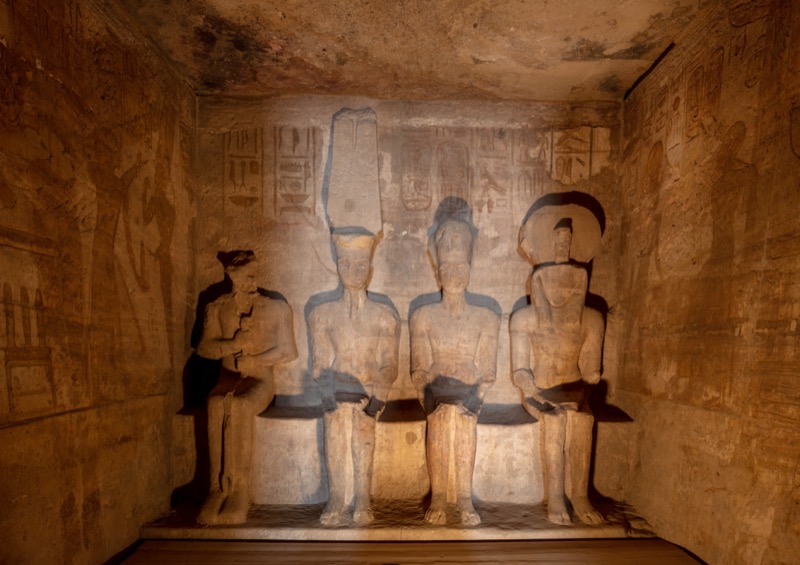
Twice each year the rising sun penetrates the full 60-metre length of the Great Temple of Ramesses II at Abu Simbel and illuminates three of the four colossal statues inside the inner sanctuary — Ra-Horakhty (sun god), Ramesses II (the king as deity) and Amun (the hidden one) — for approximately 20 minutes as the light angle shifts. The fourth statue, Ptah (god of darkness and the underworld), remains in permanent shadow — a deliberate ancient design choice. The phenomenon begins as a narrow shaft at the sanctuary threshold and broadens across the floor as the sun rises, reaching the statues' faces at around 06:25–06:40 local time depending on atmospheric conditions.
When the original temple was relocated in the 1960s to save it from the rising waters of Lake Nasser, UNESCO engineers re-oriented it to within two degrees of the original solar alignment — an extraordinary feat of precision under significant engineering constraints. The 22 February date is traditionally linked to Ramesses II's coronation anniversary; the 22 October date to his birthday. Modern Egyptological research suggests the precise original significance may be slightly different, but the solar event itself is undeniable and deeply impressive.
Practical notes: Abu Simbel is 280 kilometres south of Aswan by road or a 30-minute flight. On festival dates, the site opens at 05:00 to accommodate visitors wanting to be inside before sunrise. Accommodation in Aswan and Abu Simbel village is fully booked two to three months in advance of both dates. Day trips from Aswan on festival dates operate convoy buses departing around 03:30–04:00. Entry on festival days: EGP 660 standard, plus any photography tickets. The Sun Festival is described in context on our Top Sites page under Abu Simbel, and the Day Tours page covers the Aswan-to-Abu-Simbel logistics in detail.
Ramadan — Dates Shift Each Year
Ramadan — the Islamic holy month of fasting from dawn to sunset — falls approximately 10–11 days earlier each Gregorian year, meaning it cycles through all seasons over a 33-year period. In 2025 it ran from 1–29 March; in 2026 it will begin around 18–19 February. During Ramadan, Egypt's public character changes substantially, but heritage sites remain largely accessible to visitors throughout the month. The changes that matter most for independent travellers are: some restaurants and cafes in less-touristic areas serve no food or drink during daylight hours (hotels catering to international visitors are generally unaffected); government offices operate shorter hours; and the mood at sites shifts noticeably in the final days of Ramadan when Egyptian domestic travel intensifies.
Sunset during Ramadan (iftar) transforms Cairo and Luxor. The streets empty in the hour before iftar as people head home, then fill dramatically with celebratory noise, lights and outdoor dining immediately after. If you can align your return from a site visit with early evening during Ramadan, the experience of arriving in central Luxor or Cairo for iftar — entirely spontaneously, without any formal tourist programme — is genuinely memorable and worth planning around.
The Eid al-Fitr holiday at Ramadan's end closes many government-operated heritage sites for one to three days. Exact closure dates vary by site and year — the Supreme Council of Antiquities publishes official closure notices approximately two weeks in advance. We post confirmed 2026 closure dates to this page and our Visitor Tips page as they are announced.
Eid al-Adha — Approximately 70 Days After Eid al-Fitr
The second major Islamic holiday of the year — commemorating Ibrahim's willingness to sacrifice his son — generates a multi-day public holiday in Egypt typically lasting four to five days. During Eid al-Adha, domestic tourism surges significantly, particularly at open outdoor sites accessible by car from Cairo: Giza, Saqqara and the Egyptian Museum see very high visitor numbers from Egyptian families. Luxor and Aswan, which require longer-distance travel, are less dramatically affected. International tourist numbers during this period are typically lower than the December–February peak.
For international visitors, the Eid al-Adha period in late June or late May (dates vary by year) can be an opportunity to visit Red Sea destinations at a time when coastal resorts fill with domestic visitors but the Nile Valley sites remain manageable. The Sinai peninsula — particularly the St. Catherine's Monastery area — experiences its own pattern of closures and openings around Islamic holidays that differs from the Nile Valley sites. See our Archaeological Sites page for monastery access policies.
Sham el-Nessim — Coptic Easter Monday
Sham el-Nessim — literally "smelling the breeze" — is Egypt's ancient spring festival, observed since at least the time of the Old Kingdom. Unlike Ramadan or Eid, it is celebrated by both Muslim and Christian Egyptians and falls on the Monday following Coptic Easter (which uses the Alexandrian calendar and falls one to five weeks after Western Easter, typically in April or early May). It is a national public holiday, and Cairo families traditionally spend the day outdoors at parks, corniche riverside walks and picnic sites. Giza and Saqqara are extremely busy on this day from Egyptian domestic visitors; Luxor and Aswan remain calm. It is not a site closure day — all monuments remain open.
Wafaa El-Nil — Mid-July
The ancient Egyptians built their entire civilisation around the annual flooding of the Nile — the inundation that deposited rich silt across the farmland and made the narrow river valley uniquely fertile. The Aswan High Dam, completed in 1970, ended the natural flood cycle entirely. Wafaa El-Nil (Loyalty of the Nile) is a modern festival held in mid-July that commemorates the old flood season, primarily in Cairo with cultural events, boat processions on the Nile and open-air concerts. It attracts a mix of domestic tourism and Egyptian cultural observers, but is not a public holiday and does not affect heritage site access.
For visitors interested in the relationship between ancient Egyptian religion and the Nile's natural rhythms — which underpins the placement and orientation of virtually every major pharaonic monument — the Flooding of the Nile as an astronomical and agricultural event is covered in depth on our Nile Cruises page, which explains the route between Aswan and Luxor in terms of the ancient landscape rather than just the modern cruise product.
Coptic Christmas — 7 January
Egypt's Coptic Christian community — estimated at 10–15% of the population — celebrates Christmas on 7 January according to the Julian calendar. It is a public holiday throughout Egypt. The day generates celebratory gatherings in the predominantly Christian neighbourhoods of Cairo (particularly Shubra and parts of Old Cairo) and some cities of Upper Egypt. Heritage sites remain open. For visitors whose trip straddles 7 January, the day is an opportunity to observe a major Coptic cultural moment in a country where the Coptic Orthodox Church maintains the oldest continuously practising Christian community in the world. The Coptic Museum in Old Cairo — one of the most significant Christian antiquities collections globally — is a natural point of focus on this day.
The period immediately following Coptic Christmas — second and third weeks of January — is consistently one of our most highly recommended windows for independent visitors. Crowd numbers drop from the Christmas/New Year peak, temperatures remain comfortable (15–24°C in Luxor), prices moderate, and monument access returns to a manageable level. If your schedule permits, target 9–24 January for one of the least-disrupted heritage visiting windows of the year.
Four Broad Seasons for Planning Purposes
Egypt's tourism year divides into four practical windows. Which suits you depends on your heat tolerance, budget, crowd preference and which sites matter most to your itinerary.
Peak Season — December to February
The most popular and climatically ideal window. Daytime temperatures at Luxor average 22–25°C; evenings are cool enough for a light jacket. The downside is crowds: major sites see their highest daily visitor counts in January and the first half of February. Book accommodation and Nile cruise cabins four to six months in advance for December. The Abu Simbel Sun Festival on 22 February is the highlight of the late-peak window and attracts dedicated visitors from across the world. Sound-and-light shows at Karnak, Giza and Philae operate on their full schedules throughout this season.
Best for: First-time visitors, older travellers, those visiting with children. See our Day Tours page for peak-season logistics at Giza and Luxor.
Shoulder Season — March, April, October, November
Four months of genuinely excellent conditions with meaningfully fewer visitors than the December–February peak. March and April see rising temperatures — Luxor reaches 35°C in April — but morning site visits are comfortable, and the khamsin dust winds of March–April are a real but manageable nuisance (they rarely last more than a day or two at a time). October and November offer ideal heat (25–33°C) and are increasingly popular; November in particular has seen crowd numbers rise over the past five years as travel writers and social media have elevated its profile.
Best for: Experienced travellers, those with flexibility on exact dates, visitors targeting the October Abu Simbel festival. Also see Visitor Tips for khamsin guidance.
Hot Shoulder — May, September
May and September occupy the transition zones between the tolerable shoulder season and the extreme summer. May temperatures in Luxor reach 40°C; September is similar at month's start but eases to 35°C by the last week. Both months offer very few international tourists, moderate prices and good monument access. May overlaps with Ramadan in some years (see dates above), which affects logistics but also adds cultural richness. September is arguably the best of the five months for the combination of manageable heat, empty sites and value accommodation.
Best for: Budget-conscious travellers, those who have visited before and want empty sites, visitors combining Egyptian heritage with a Red Sea beach stay.
Summer — June, July, August
Daytime temperatures at Luxor consistently exceed 42°C from mid-June through August. Open-air sites such as the Valley of the Kings, Karnak and Giza are unsafe for extended visits between 09:00 and 16:00. The practical visit window is 05:30–08:30 and 16:30–18:30. Within those two windows, summer offers something no other season can: Egyptian heritage sites nearly entirely to yourself. The Grand Egyptian Museum (GEM) — fully air-conditioned and one of the finest museum experiences in the world — is a particular asset during summer, since the outdoor heat makes the indoor galleries even more appealing. Nile cruise prices reach annual lows in July and August.
Best for: Heat-acclimatised travellers, museum-focused visits, Nile cruise at minimum cost. Read our Nile Cruises guide for summer cabin pricing.
Which Sites to Prioritise in Each Season
Not all Egyptian heritage sites are equally affected by heat, crowds and seasonal closures. Some are best in winter; others are actually better in the off-season for specific reasons.
Giza Plateau
Best visited October–April during daylight hours. The plateau is entirely exposed — no shade, high reflectivity from pale limestone. Summer visits are feasible only at 05:00–07:00 opening. December and January mornings see the largest coach groups arriving at 08:00; arrive at opening time to beat them by 90 minutes. The sound-and-light show runs year-round and is worthwhile in any season — cool evenings make December and January the most comfortable.
Karnak & Luxor Temple
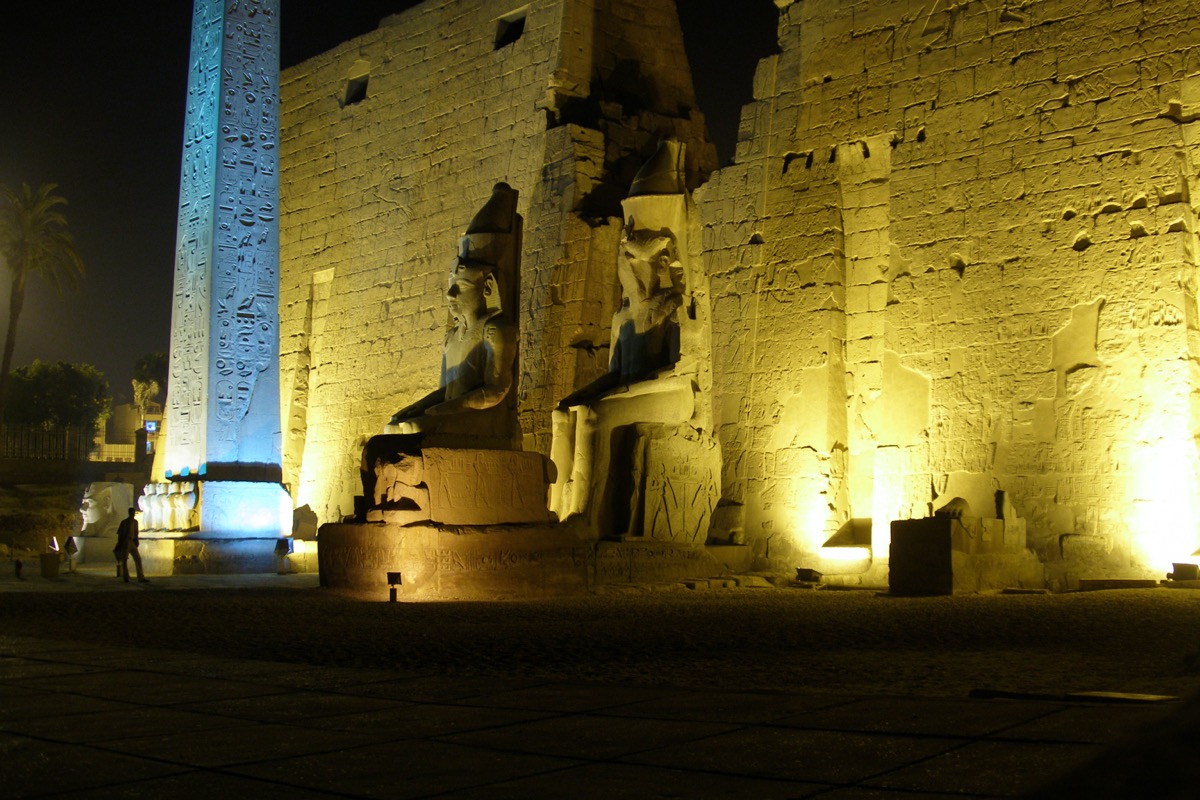
Year-round visits are feasible because both sites offer a degree of shade within hypostyle halls and between columns. The best light for photography at Karnak is at 06:00 in winter (dawn striking the obelisks) and 16:30 in summer (low afternoon sun illuminating the western pylons). Luxor Temple is legitimately improved at night in any season — the winter illumination creates one of the finest heritage site atmospheres in the world.
Valley of the Kings
The valley's east-facing orientation means it fills with direct sun from about 07:00 onwards in summer, making mid-morning visits genuinely unpleasant by June–August. The tombs themselves are naturally cool and dark — the thermal mass of the hillside keeps interior temperatures 10–15°C below outside. The best strategy in summer is to enter the valley at opening (06:00) and spend most of your time inside tombs, exiting before 09:30. October–April allows a full-length morning visit without heat concerns.
Abu Simbel
Abu Simbel has two natural visit contexts: the February and October Sun Festivals, and all other dates. Outside festival dates, any time of year is suitable — the temples are partially shaded by their carved-rock setting and visits typically run 90 minutes to two hours. The most practical approach in summer is the overnight stay in Abu Simbel village (three small hotels available), allowing a 05:30 visit before the 07:30 day-trip convoy arrives from Aswan. In winter, day trips from Aswan are comfortable and straightforward.
Grand Egyptian Museum
The GEM is fully air-conditioned and the best major heritage destination during summer precisely because it eliminates the heat variable entirely. Open until 21:00 daily, it rewards evening visits in all seasons — the late-afternoon crowd clears between 17:00 and 18:30, and the Tutankhamun wing in particular benefits from the reduced congestion after 18:00. Our Top Sites entry for the GEM includes a recommended internal walking route that minimises backtracking across the 100,000 m² floor space.
Nile Cruises
Cruise vessels operate year-round between Aswan and Luxor. December–February cabins book earliest and command the highest prices; July–August cabins can be significantly cheaper and are sometimes available with minimal notice. The on-board experience is air-conditioned regardless of season; the challenge is the port visits at Kom Ombo, Edfu and Esna in summer, which are best conducted very early in the morning before the vessel moves on. Our Nile Cruises guide details how operators structure their shore excursion timing in each season.
Planning Your Abu Simbel Sun Festival Visit
Abu Simbel is 280 kilometres south of Aswan, reached by road convoy or a 30-minute EgyptAir domestic flight. On Sun Festival dates (22 February and 22 October), the site opens at 05:00. Most visitors arrive via convoy from Aswan, departing around 03:30–04:00, which means leaving your hotel in darkness. The key is to be at the entrance well before first light — the queue on festival dates forms from 04:30 onwards and the temple fills within 30 minutes of opening.
The solar illumination lasts approximately 20 minutes and is clearly visible even from the rear of the inner sanctuary, though positioning matters if you want an unobstructed view of all three illuminated statues simultaneously. The site inspectors manage crowds actively on festival days; following their directions significantly improves the experience for everyone. After the illumination, spend additional time with the adjacent Temple of Nefertari — it sees far fewer visitors even on festival days and its painted reliefs are among the finest preserved in Egypt.
Accommodation: Abu Simbel village has three small hotels. Staying overnight allows you to be at the gate at 05:00 without the pre-dawn convoy from Aswan. Book three to four months ahead for both February and October dates. For full accommodation and logistics, request our Aswan and Abu Simbel guide pack.
Seasonal Planning FAQ
Need a Personalised Timing Recommendation?
Tell us your travel window, which sites matter most to you, and any constraints — heat tolerance, festival preferences, budget. We'll advise on the ideal dates and what to book first.
Reach the Desk Visitor Tips